
Gasolina · 2004
Gasolina: the three minutes that pushed reggaeton out of Puerto Rico and onto every dance floor
Gasolina review. Daddy Yankee and Luny Tunes' 2004 single is a blunt, relentless reggaeton engine whose hook still starts a party two decades on.


Excellent
Editorial score out of 10
"Gasolina" is the moment reggaeton stopped being a regional sound and became a global one, and it got there by refusing to be subtle about anything. Daddy Yankee raps at full throttle, Luny Tunes keep the dembow pounding without a break, and the hook is a single word thrown back and forth until the whole room is shouting it. There is no bridge, no ballad section, no concession to radio programmers outside Puerto Rico. It did not need one.
- 8.8
- Editorial score
- #20
- Of 38 songs reviewed
- 2004
- Released
- 3:12
- Length
Twenty years on, it is easy to hear what dates it: a mix that sounds thin by modern standards, and a lyric with one joke in it. It is harder to argue with what it did. It opened doors that the Latin pop crossovers of the 2010s would walk through, and its beat is still a reliable way to fill a dance floor at a wedding, a club night or a stadium.
Context
By 2003 Daddy Yankee had spent more than a decade in Puerto Rico's underground, from mixtapes with DJ Playero to independent albums that sold strongly on the island and barely registered beyond it. Reggaeton was still treated by much of the industry as a local phenomenon, loud, cheaply recorded and easy to dismiss. Barrio Fino, his third studio album, was the attempt to change that, and Luny Tunes, two Dominican producers working from their own studio in Carolina, were central to it: they produced nine of its twenty-one tracks.
"Gasolina" was written in 2003 with the rapper Eddie Dee and arrived on the album in July 2004. It was not an instant crossover. It reached English-language audiences in stages: Spanish-language radio in New York and Florida first, then a video premiere on MTV's Total Request Live in November, then the Hot 100, and finally a UK release the following summer that took it into the top five.
2003
Daddy Yankee and Eddie Dee write the song with Luny Tunes
13 July 2004
Released on Barrio Fino, which debuts at No. 1 on the US Top Latin Albums chart
August 2004
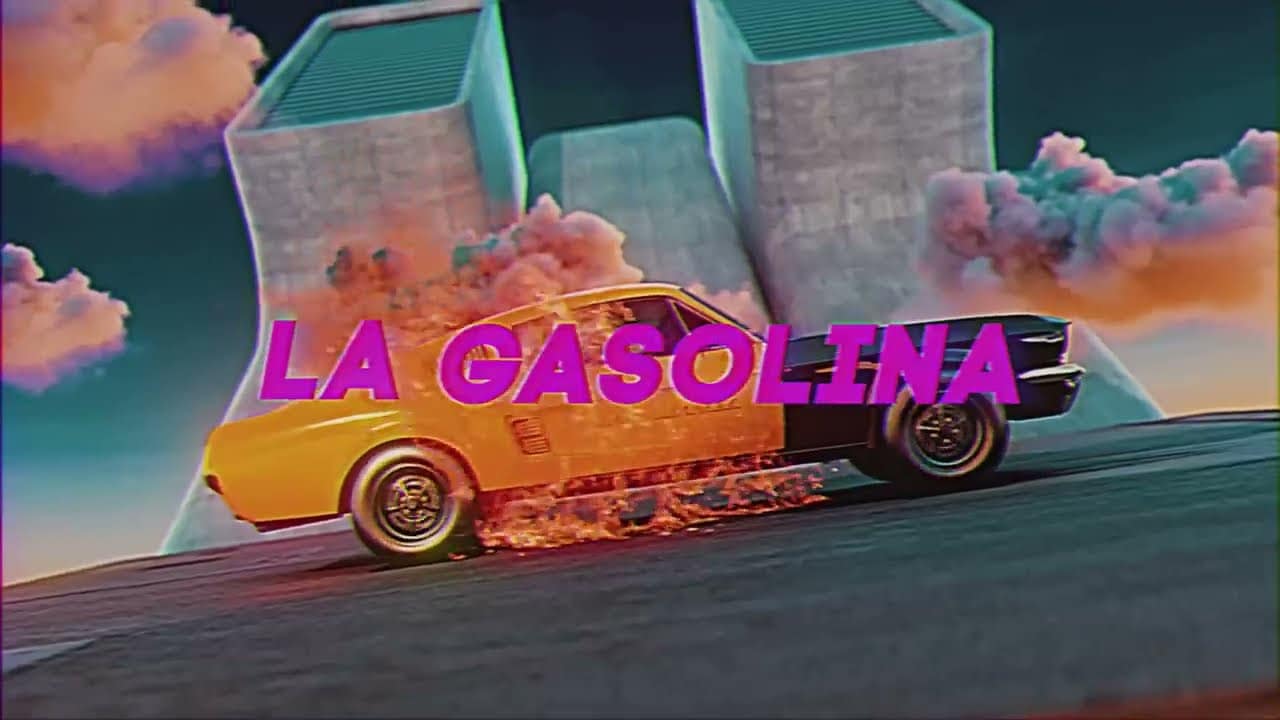
The video is shot in Santo Domingo, at a racetrack and in the Zona Colonial
October 2004
Sent to US radio as the lead single; the video premieres on MTV in November
January 2005
Peaks at No. 32 on the Billboard Hot 100
July 2005
Released in the UK, where it reaches No. 5
2023
Selected for the US National Recording Registry
Songwriting
The lyric describes a woman who lives for fast cars and late nights, and the title, the fuel she cannot get enough of, does double duty as innuendo. That is the whole conceit, and the verses do little more than restate it with different details. Taken as writing, it is thin, and anyone looking for the social observation that appears elsewhere on Barrio Fino will not find it here.
What the song does have is a structure designed for a crowd. The hook is a call and response: Daddy Yankee sets it up, and the singer Glory, uncredited on the record, answers with the title in a voice that sounds like it is coming from the dance floor rather than the booth. It is the oldest trick in party music, and the reason the song works in rooms where nobody speaks Spanish. A listener needs to know one word to join in, and the song makes sure they know it within seconds.
A party record that asks the crowd for one word, and gets it back louder every time.
Production
Luny Tunes built the track on the dembow, the syncopated drum pattern reggaeton inherited from Jamaican dancehall, and then refused to take it away. There is no breakdown worth the name. Stabbing synth figures, a few sound effects and the vocal ride on top of a rhythm that does not change its mind for three minutes. The effect is less a song with a groove than a groove with a song attached, and that relentlessness is exactly the point.
It is also where the record shows its age. The low end is modest by the standards that reggaeton producers set in the decade that followed, and the top of the mix is bright to the point of harshness on large speakers. Played next to the polished, bass-heavy productions of the genre now, it sounds raw. Some of that rawness is charm; some of it is a budget.
How it measures up
- Energy
- 9.5/10
- Starts at full speed and never brakes
- Intimacy
- 2/10
- Built for a crowd, not a pair of headphones
- Density
- 5.5/10
- Few elements, all of them loud
- Accessibility
- 9/10
- One word is enough to join in
Performance
Daddy Yankee's delivery is the human engine of the record. His flow is quick, clipped and percussive, landing on the beat rather than drifting across it, and his voice has a nasal edge that cuts through any sound system. He sounds like someone who has played this to a club full of people many times before it was ever recorded, which, by most accounts of the Puerto Rican scene of the time, is close to true.
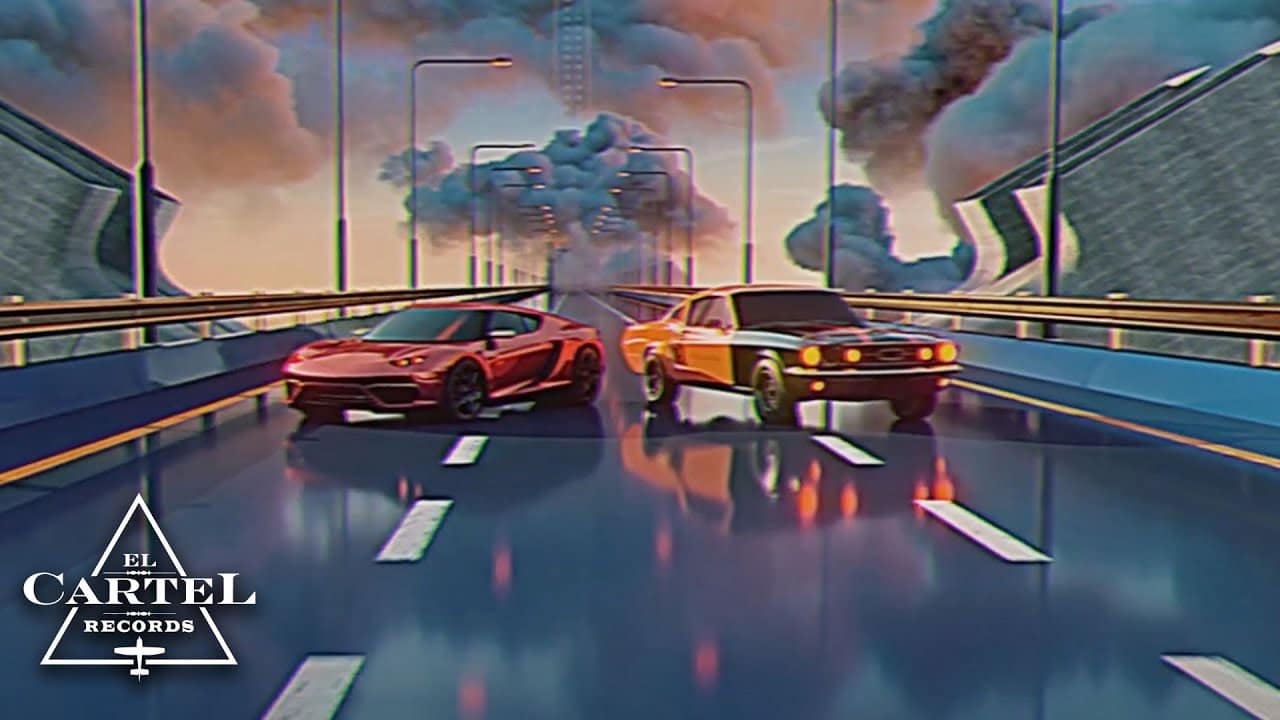
Glory's part is small and essential. Her answers to the hook give the song its second voice and its sense of a party in progress, and the decision to leave her name off the credits remains the record's least defensible choice. The video adds the rest: shot in Santo Domingo, at a motor racing circuit and in the colonial old town, it turned the lyric's car imagery into something literal, and heavy rotation on MTV did the remaining work.
Versions and afterlife
A hit of this size was always going to be remixed, and the early remixes show how quickly the English-language industry wanted in. None of them improves on the original, but each says something about who the song was reaching.
| Version | Where it appeared | What changes |
|---|---|---|
| Original | Barrio Fino, 2004 | The reference recording, with Glory's uncredited hook |
| DJ Buddha remix featuring Pitbull and N.O.R.E. | Late 2004 | English and Spanish verses aimed at US hip-hop radio |
| Lil Jon remix | Bonus disc of Crunk Juice | Crunk ad-libs layered over the original |
| Safari Riot remix featuring Myke Towers | 2023, Fast X soundtrack | A newer reggaeton star on a cleaner, heavier mix |
The recognition followed more slowly. "Gasolina" was the first reggaeton record nominated for Record of the Year at the Latin Grammys, and Barrio Fino won Best Urban Music Album at the same ceremony in 2005. In 2023 the Library of Congress chose it for the National Recording Registry, the first reggaeton recording to be preserved there, alongside entries such as the Super Mario Bros. theme and Mariah Carey's Christmas standard.
Why it lasts
The case for "Gasolina" rests on what it made possible as much as on what it is. Thirteen years later Daddy Yankee would add his verse to a far more polished crossover, Despacito, and the distance between the two records shows how much the genre had learned by then. The comparison is useful in both directions: "Despacito" is the better-made record, while "Gasolina" is the one that had to break the door down first.
Head to head

- Production
- 9.38.7
- Performance
- 9.18.3
- Songwriting
- 8.28.4
- Replay value
- 8.67.4
Gasolina edges it by 0.6. See them side by side
It also helps explain the generation that followed. Bad Bunny's Tití Me Preguntó inherits the confidence of a genre that no longer needs to translate itself, and that confidence began with records like this one. As a listen at home, it is less rewarding than its reputation; as a record to drop when a party needs a jolt, it remains close to undefeated.
For you if
- Anyone who wants to hear where global reggaeton began
- DJs and party hosts who need a floor-filler that crosses generations
- Listeners who like their dance music blunt, fast and loud
Not for you if
- Listeners who want lyrics with more than one idea in them
- Anyone who prefers the deep, polished low end of current reggaeton
For the official story of the career this song launched, the artist's own site is the place to start.
What works
- A one-word hook built as call and response, so a whole room can answer it
- Luny Tunes' beat never lets up, and every element on it is there to move feet
- Daddy Yankee's flow is quick, clipped and audible over any sound system
- The shortest route into the history of reggaeton, in a little over three minutes
What doesn’t
- The lyric is a single innuendo stretched across the whole song
- The 2004 mix sounds thin and brittle next to modern reggaeton productions
- Glory carries the hook and still has no credit on the record
The verdict
"Gasolina" earns its score on impact and on the parts of its craft that still work: a beat that never loosens its grip, a performance that sounds as if it was made for a packed room, and a hook that anyone can shout back after one listen. Luny Tunes and Daddy Yankee understood that a song meant to travel beyond Puerto Rico needed to be simple, and they made simplicity into a weapon. What keeps it from the very top is the writing, which has one joke and tells it repeatedly, and a mix that has dated more than its reputation admits. As a piece of history it is essential; as a record, it is still very good company at two in the morning.
